Garage Floor Coating in Las Vegas, NV
Floor Coating Services in Las Vegas, NV
Las Vegas garages sit in one of the hottest and driest major metro climates in the country. The July average high is about 104.5°F, and a normal year brings about 78 days at or above 100°F. That makes heat exposure a routine design condition rather than an occasional extreme, especially at the garage threshold where afternoon sun and hot tires meet the coating.
The city itself is also a very large residential market, not just the Strip. Las Vegas had an estimated 679,817 residents in 2025, nearly 248,000 households, and about 165,600 single-family homes in the most recent local housing count. That means garage floors range from long-used slabs in established neighborhoods to much newer concrete in expanding western and northwestern communities.
The dry climate does not mean every slab is automatically moisture-free. Irrigation, plumbing leaks, wash-down water, monsoon runoff, and vapor movement through concrete can still create localized moisture problems. A durable coating starts with the actual slab in front of you: inspect it, mechanically prepare it, repair what needs repair, and choose an exposed topcoat that can handle Las Vegas heat and UV.
Local Market Insight
Las Vegas is a heat-first market, but slab history still matters. The city combines intense desert exposure with a huge range of housing ages and garage conditions, so preparation should be based on the individual slab rather than a one-size-fits-all desert assumption.
What Affects the Cost of Garage Floor Coating in Las Vegas?
Garage floor coating in Las Vegas typically runs $6–$12 per square foot, with a typical two-car garage around $3,000–$5,500. The biggest cost differences usually come from the amount of preparation and repair needed before coating, the garage size and layout, and the coating system and finish selected.
Old paint, sealers, or failed coatings.
In a city with a large stock of established single-family homes, previous DIY paint or older coating systems can add removal and grinding time before a new system can bond correctly.
Cracks, spalls, and patching.
Heat cycling and years of vehicle use can leave repairs that need to be stabilized and blended into the preparation scope.
Garage size and bay count.
Las Vegas has everything from compact attached garages to large three-car and workshop-style spaces; total square footage changes material and labor requirements.
Sun exposure at the door.
South- and west-facing openings can put more of the floor in direct sun. UV-stable exposed layers and good edge preparation matter most near the threshold.
Moisture and runoff surprises.
Even in a desert, irrigation overspray, plumbing, slab vapor, or monsoon water can show up around edges and low spots. Moisture testing or additional prep can change scope.
Decorative system choice.
Full-broadcast flake, metallic, quartz, and other systems differ in material, labor, traction, and finish requirements.
Call for a clear, project-specific estimate — or request one online.
Local Garage-Floor Conditions in Las Vegas
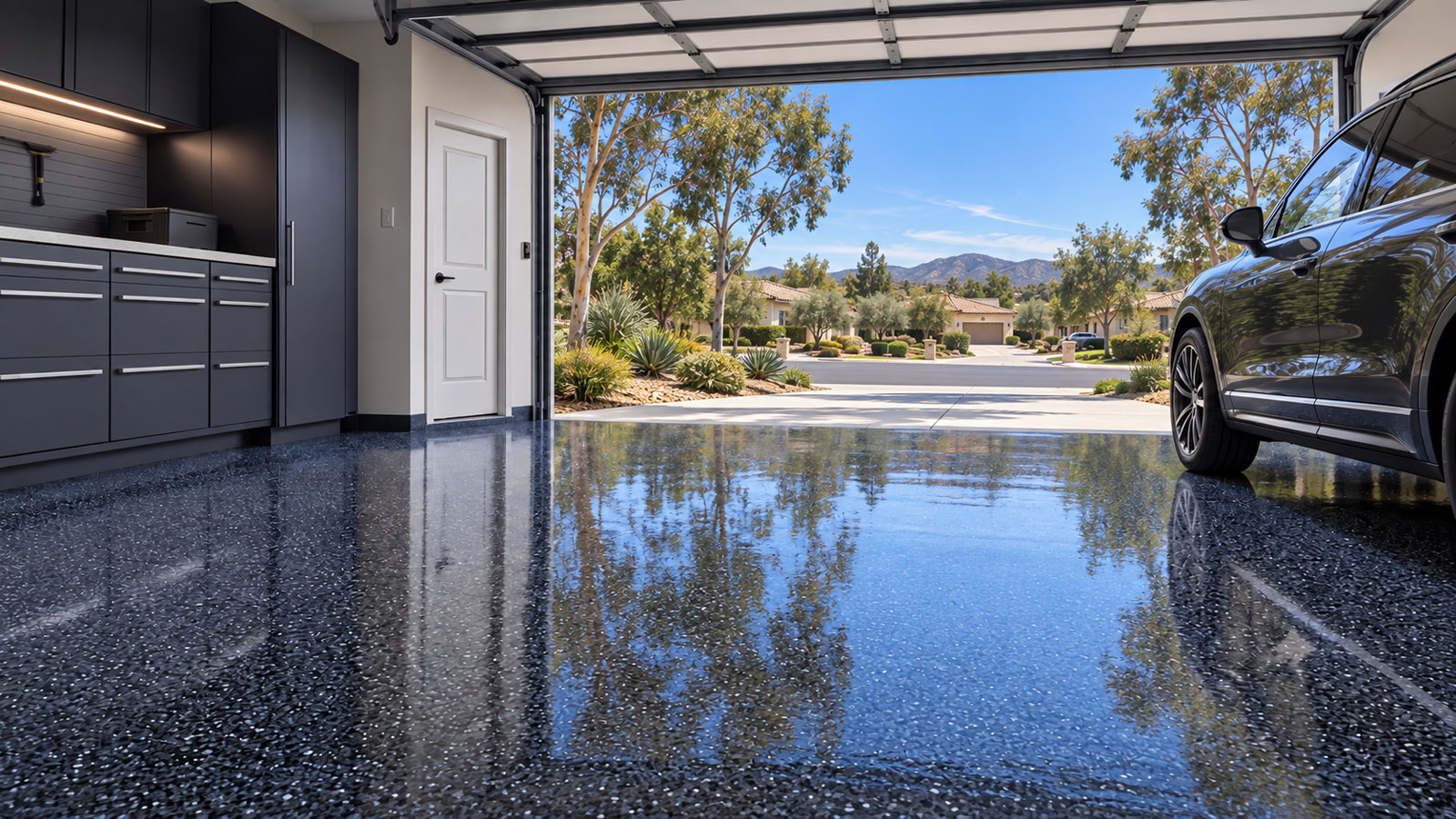
Dust is part of daily garage use in the valley. Desert soil, fine road dust, and landscaping debris come in on tires and shoes, so a full-broadcast flake system with a cleanable topcoat is often attractive because it hides routine dust better than a perfectly uniform solid color.
Heat also affects project staging. A professional installer may manage material temperatures, working time, and cure schedule differently in July than in January. The homeowner's useful question is not simply “How fast does it cure?” but “What return-to-service schedule are you using for the conditions in my garage?”
Finally, do not assume a newer-looking garage means the slab is ready without preparation. Newer concrete can still have curing compounds, sealers, construction residue, or surface laitance. Older concrete can have oil contamination, patches, and previous coatings. Mechanical surface preparation is the common denominator.
Heat, UV, and the garage threshold
Las Vegas heat is not an occasional summer event. July alone averages about 26 days at or above 100°F, and the valley's urban heat island has pushed nighttime temperatures upward over time. The practical garage-floor consequence is concentrated at the door: sunlight, hot tires, and the temperature swing between an air-conditioned house and a sun-baked driveway all meet there.
That does not mean every floor needs the same chemistry. It does mean the exposed finish should be selected with UV resistance, hot-tire service, and realistic return-to-service timing in mind. The first few feet inside the garage deserve as much attention as the decorative field in the middle.
Dry climate, sudden water
Las Vegas averages only about 4.18 inches of precipitation per year, but summer monsoon storms can produce brief heavy rain and flash flooding. Water can move quickly across driveways, through low spots, and toward garage thresholds even after long dry periods.
Before coating, look for staining near the door, evidence of past ponding, sprinkler or irrigation patterns, and drainage that sends water toward rather than away from the garage. A coating can make the floor easier to clean, but it does not correct a drainage problem outside the slab.
Homeowner Checklist for a Las Vegas Garage
- Is there old paint, sealer, or a previous coating anywhere on the slab?
- Does water ever collect at the garage door or along a side wall after storms or washing?
- Which direction does the garage door face, and how much direct afternoon sun reaches the floor?
- Are there cracks, patched areas, spalls, or oil-darkened sections?
- Will the floor support only parked cars, or also tool chests, jacks, motorcycles, gym equipment, or workshop use?
Las Vegas Garage Floor Coating FAQs
Does Las Vegas heat change which garage coating I should use?
It changes what you should ask about. The exposed topcoat should be suitable for strong UV and hot-tire service, and the installer should account for high ambient and slab temperatures during installation. Good preparation remains just as important as product choice.
If Las Vegas is so dry, why test a garage slab for moisture?
Because slab moisture can come from more than rainfall. Irrigation, plumbing, past leaks, vapor movement, and localized drainage can all matter. A dry climate lowers one source of moisture; it does not eliminate the need to evaluate the actual slab.
What usually adds cost on an older Las Vegas garage?
Removal of prior coatings, oil contamination, crack or spall repair, and extra grinding are common scope items. The age of the house is useful context, but the condition of the slab is what determines the work.
Will a coated floor help with desert dust?
A sealed resin surface is much easier to sweep, vacuum, or mop than porous bare concrete. A flake finish can also make everyday dust and tire marks less visually obvious between cleanings.
Las Vegas Neighborhoods & Local Context
Project Considerations
Phone Quote Line
Speak with a floor coating specialist about your project and get a realistic estimate range.
(725) 444-8588Typical Project Cost
$3,000–$5,500
Typical range for a two-car garage. Final pricing depends on floor size, concrete condition, prep work, coating type, and finish options.
Helpful Guides